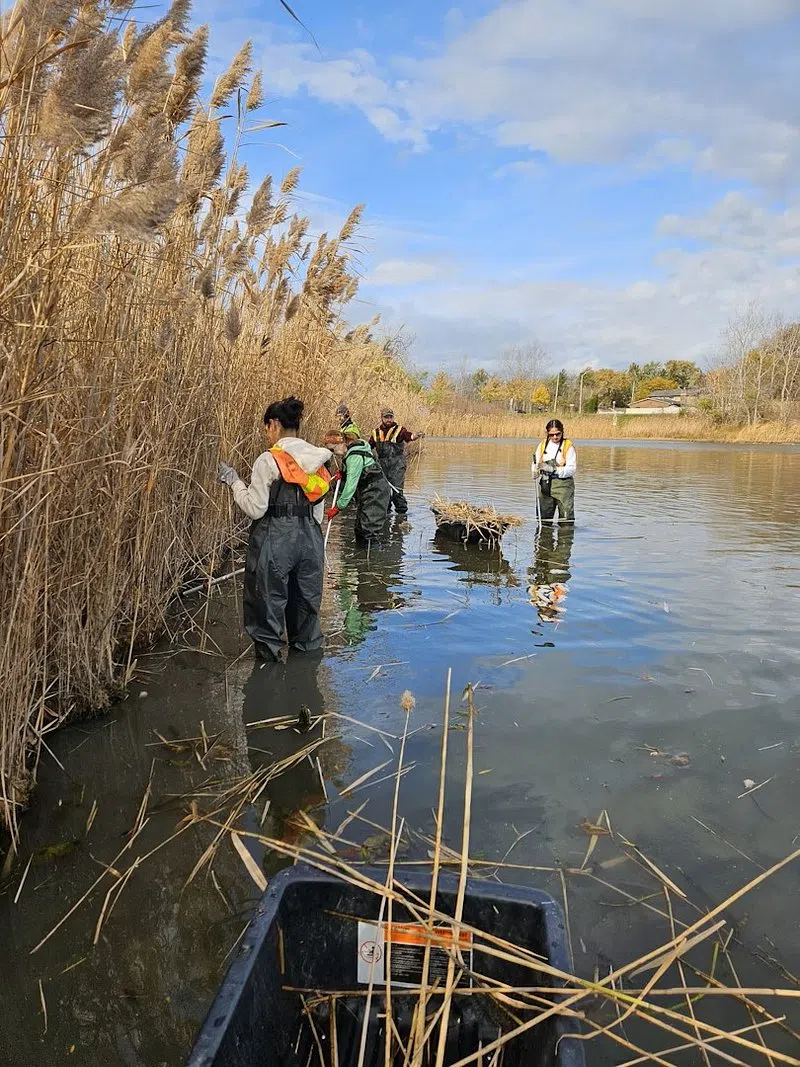
The Ontario Phragmites Action (OPA) program will support 87 new invasive plant control projects in 2025 through the Invasive Phragmites Control Fund.
Backed by the Ontario Ministry of Natural Resources, the program is coordinated by the Invasive Species Centre and the Nature Conservancy of Canada.
Phragmites australis, or European common reed, is considered Ontario’s most damaging invasive plant. It spreads quickly through seeds and root fragments, forming dense stands that choke out native plants, reduce biodiversity, and increase flooding risks.
These thick reeds also raise maintenance costs for roads, waterways, and farmland while blocking public access to wetlands and beaches.
OPA is pleased to support several organizations in southern Ontario in 2025, including: the City of St. Thomas, Ausable Bayfield Conservation Authority, Birds Canada, Caldwell First Nation, County of Perth, County of Wellington, Eelnaapéewi Lahkéewiit (Delaware Nation), First Nations Phragmites Control, Grand River Employment and Training Inc. (Kayanase), Haldimand Stewardship Council Inc., Long Point Region Conservation Authority, and the Corporation of Norfolk County.
Projects like Ausable Bayfield’s will manage Phragmites along 1,700 kilometres of roads, map 1,200 more for future work, and treat 12 new sites.
Officials say early action saves future removal costs and protects wetlands, farmland, and tourism.
Learn more at OntarioPhragmitesAction.ca.
Written by: Jeremy Hall