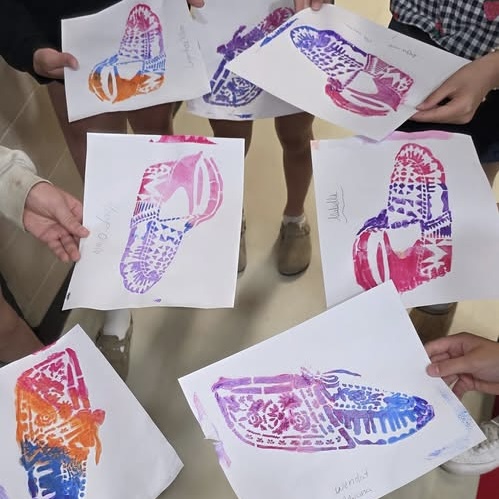
A local Indigenous education initiative that started with four moccasin designs in Ontario is taking a major step forward, going national.
The Moccasin Identifier officially launches its national educational kit September 29, expanding its Indigenous history and treaty education resources to classrooms and communities across Canada.
At the heart of the program is a simple idea: using the moccasin as a way to start conversations about Indigenous history and connections to the land. Educational kits help students learn whose traditional territory their school is on, which treaty area they live in and how moccasin designs differ among Indigenous Nations based on culture, landscape and locally available materials.
Until now, the Ontario program has used four moccasin designs representing the Wendat, Haudenosaunee, Cree and Anishinaabe. The national kit significantly builds on the original Ontario program, and Executive Director Laurie Froman says reaching this point has been several years in the making.
The additional designs were created by local Indigenous artist Cathie Jamieson of the Mississaugas of the Credit First Nation and represent traditional Indigenous territories surrounding provincial and territorial capitals across Canada.
Froman says considerable research and collaboration went into the artwork.
The organization also partnered with Saskatchewan’s Office of the Treaty Commissioner and an educational consultant to develop treaty education modules tailored to primary, middle and high school students.
The materials are designed so educators across the country can bring the program directly into their schools.
The Ontario program isn’t going anywhere. The national kit instead broadens the organization’s reach, with businesses and community organizations also encouraged to take part.
For Froman, the expansion moves the Moccasin Identifier closer to a much bigger goal.
The launch was deliberately scheduled ahead of the National Day for Truth and Reconciliation on September 30, giving Canadians another opportunity to learn about Indigenous cultures and their connections to the land.
Written by Jeremy Hall