The holiday season is here, and the Invasive Species Centre is urging everyone to check their natural decorations, such and Christmas trees and wreaths, for invasive pests, egg masses, and plants.
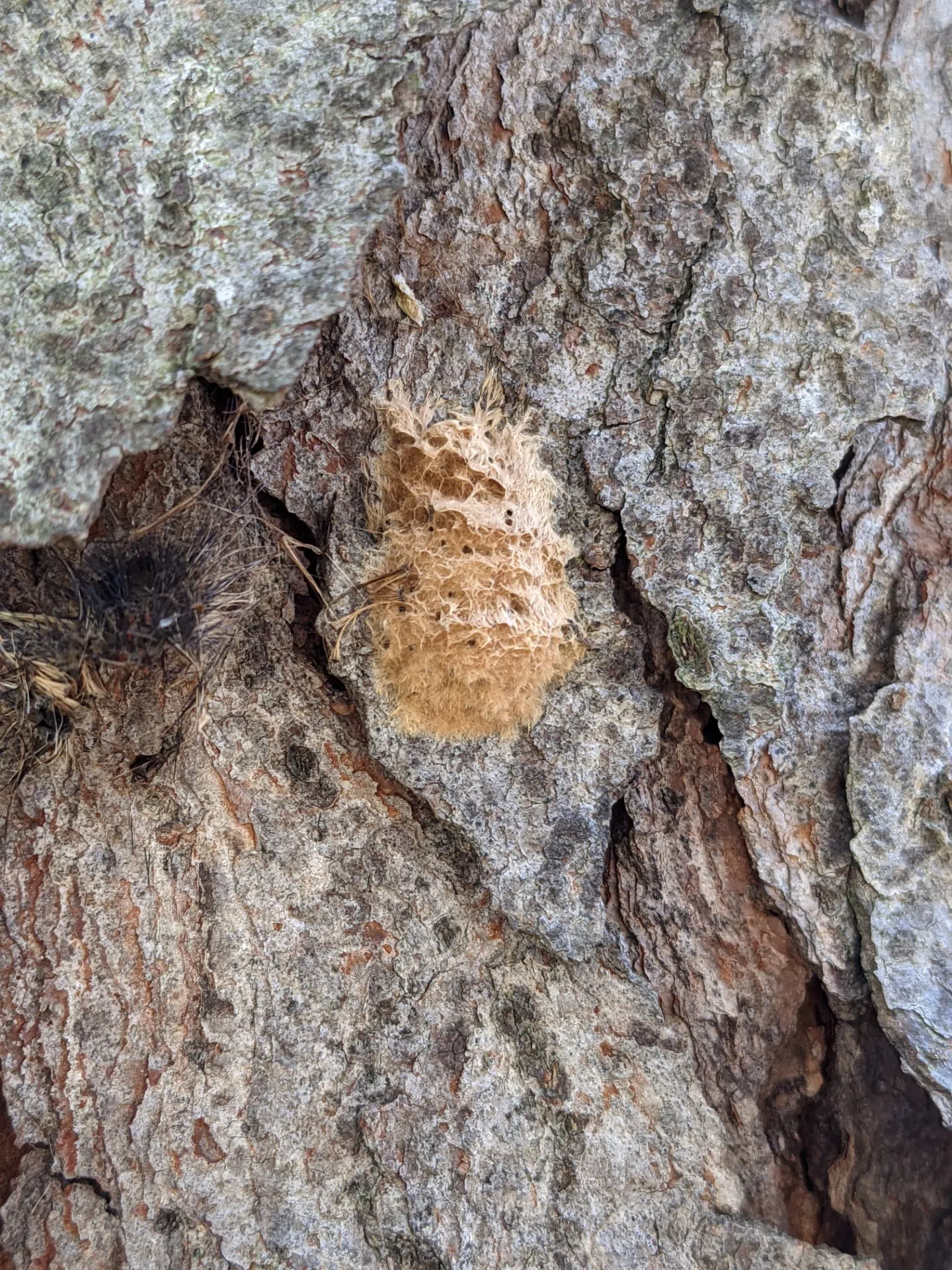
Christmas trees should be inspected for pests and egg masses laid by the invasive spongy moth and spotted lanternfly.
Spongy moths are a significant threat to trees acorss Canada, causing heavy defoliation and tree mortality, as well as human health risks due to the rash caused by the caterpillar’s hairs.
Spongy moths lay tanned yellow, spongy masses, which have a texture compared to the felt of a tennis ball and typically contain 100-1,000 eggs.
If you find an egg mass, snap a picture and report the sighting to EDDMapS or iNaturalist, or call the Invading Species Hotline at 1 (800) 563-7711.
Then, follow the Scrape – Soak – Scrap Method:
– Use a scraper, such as a butter knife, to carefully remove the mass. Always wear gloves and protective glasses and take caution if scraping from a ladder.
– Soak the masses in a bucket of dish soap and water mixture for 48 hours.
– Dispose of the egg masses
Spotted lanternflies are regulated pests under the Plant Protection Act, and has the potential to lay waste to grape and wine production.
Spotted lanternfly egg masses look like a smear of grey-brown mud and can be found on virtually any hard surface outdoors in the fall and winter.
If you spot one, follow the Snap It – Catch It – Report It Method:
– Snap a clear picture.
– Scrape off the egg masses into a plastic bag filled with hand sanitizer or rubbing alcohol, and seal it. Egg masses can also be stored in the freezer if hand sanitizer or rubbing alcohol is not readily available.
– Then, report it as soon as possible to the Canadian Food Inspection Agency with its precise location.
Reporting sightings of spotted lanternflies is crucial, as the breeding populations have spread close to the border between Canada and the United States.
There have been live and dead sightings and interceptions of spotted lanternfly in Ontario, Quebec, New Brunswick, Nova Scotia, and Manitoba in the last two years.
Wreaths and other natural decor may also contain invasive plants such as common buckthorn, English ivy, English holly, invasive bittersweet, and invasive barberry.
These plants are sometimes used in natural decor for their attractive berries and green foliage, but the plant can easily spread if the decoration is not disposed of properly.
You can learn more about how to identify invasive species at the Invasive Species Centre website.